
How smart facility maintenance elevates productivity, safety, and brand reputation
When people think of commercial cleaning, they often picture a quick sweep and a nightly trash run. In reality, a high-performing commercial cleaning program is a strategic investment that safeguards health, elevates brand perception, and optimizes productivity. From corporate offices to medical suites and industrial floors, a thoughtful approach to cleaning can reduce downtime, improve employee well-being, and even extend the life of your assets. Below, we’ll explore practical ways to rethink cleaning as a driver of business value—while staying ahead of today’s hygiene and compliance demands.

Start with a risk-based plan. Every facility has unique risk zones. Entryways, restrooms, conference rooms, and high-touch surfaces demand higher cleaning frequency. In healthcare or food service environments, cross-contamination protocols are non-negotiable. Conduct a walk-through to identify traffic patterns, ventilation flow, and equipment density. Then, align your commercial cleaning schedule to risk: increase disinfection cycles where touchpoints are dense, and deploy microfiber systems to capture pathogens rather than redistribute them.
Prioritize indoor air quality (IAQ). Clean surfaces matter, but clean air is just as critical. Dust accumulation on vents, neglected filters, and poorly maintained HVAC systems can circulate contaminants. Integrate vent cleaning, filter replacements, and air-quality checks into your commercial cleaning checklist. Consider adding HEPA filtration and monitoring CO₂ levels in meeting rooms to ensure proper ventilation. Better air quality leads to fewer sick days and a more alert workforce.
Choose the right chemistry for the job. Not every surface or soil type needs a hospital-grade disinfectant. Overuse can damage finishes and degrade materials. Segment your chemical strategy: neutral cleaners for daily maintenance, EPA-registered disinfectants for high-touch areas, and pH-specific solutions for sensitive surfaces like stone or stainless steel. Train your cleaning team on dwell times to ensure disinfectants actually work—spray-and-wipe isn’t enough.
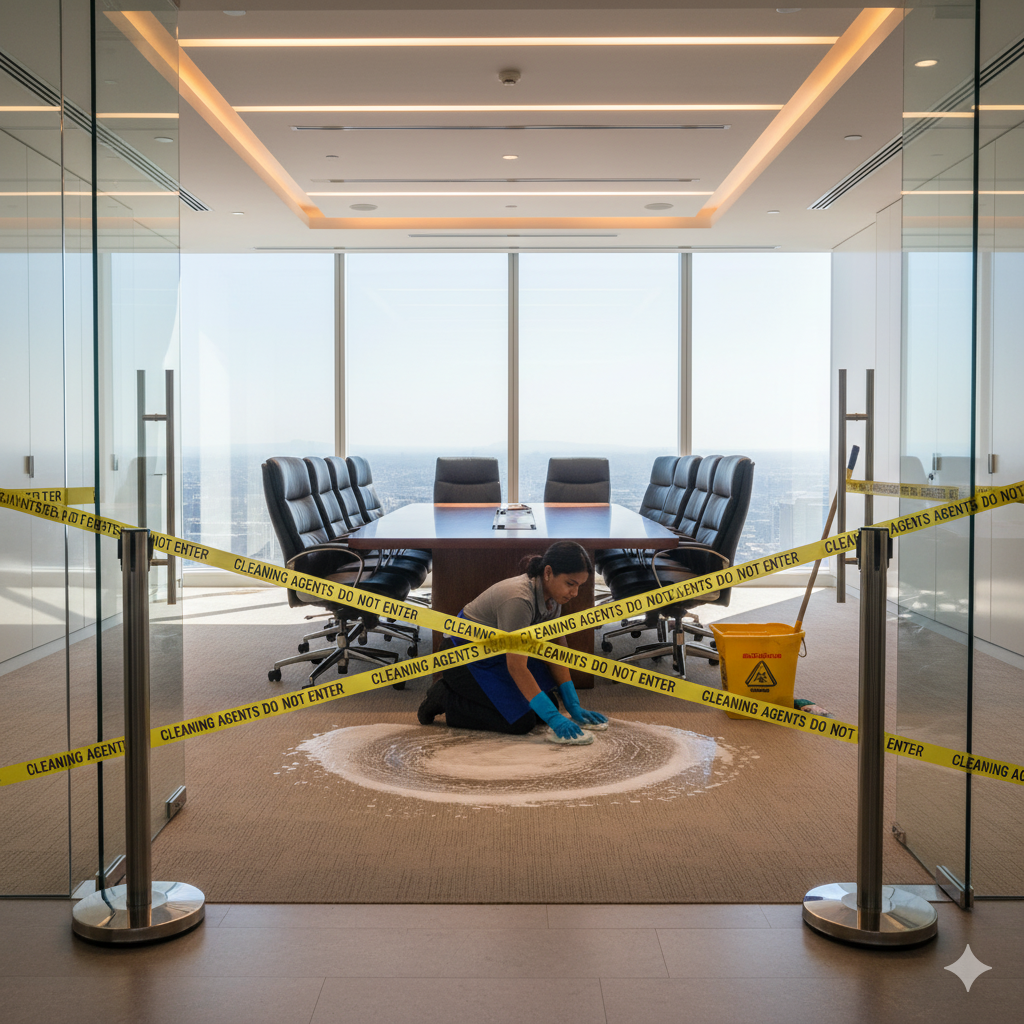
Leverage technology for consistency. Smart dispensing systems ensure correct dilution, minimizing waste and ensuring efficacy. Electrostatic sprayers provide even coverage on complex surfaces. IoT-enabled soap and towel dispensers can alert you when supplies run low, reducing service calls. Digital checklists and QR-code stations allow supervisors to verify tasks in real time, creating accountability and consistent quality in your commercial cleaning program.
Go beyond appearance: measure outcomes. A shiny floor is not the same as a sanitized floor. Incorporate ATP (adenosine triphosphate) testing to validate surface cleanliness and set benchmarks. Track metrics like response time to spills, restroom complaint frequency, and completion rates for scheduled tasks. By quantifying outcomes, you can adjust staffing, improve processes, and demonstrate ROI to leadership.
Protect your floors—protect your brand. Flooring is often the most expensive surface in a facility. To extend its life, pair daily maintenance with periodic restorative services. Use entry matting to capture 70–90% of incoming soil. Apply the right floor finish for the traffic level, and schedule burnishing or scrubbing cycles based on footfall data. Clean, well-maintained floors reduce slip hazards and reinforce a polished brand image.
Train for safety and ergonomics. Even the best tools can cause injuries if used improperly. Teach your team proper lifting techniques, ladder safety, and chemical handling. Introduce ergonomic equipment—lightweight vacuums, telescopic poles, and adjustable mops—to reduce strain. A safe and healthy cleaning crew is more consistent, more engaged, and less likely to incur costly injuries.
Sustainability as a differentiator. Clients and occupants increasingly expect green practices. Choose third-party certified products, reduce single-use plastics, and install dilution control systems to minimize packaging waste. Switch to battery-powered equipment with higher efficiency and lower noise levels to reduce environmental impact and improve occupant experience. Sustainability in commercial cleaning is not just a trend; it’s a competitive advantage.

Plan for the unexpected. Spills, outbreaks, and weather events can disrupt operations. Build an incident-response playbook that includes rapid spill containment, isolation of affected areas, and enhanced disinfection protocols. Keep an emergency cart stocked with PPE, absorbents, and signage. Preparedness minimizes downtime and demonstrates professionalism when it matters most.
Communicate your standards. Visibility builds trust. Post cleaning schedules in common areas, share IAQ improvements, and explain the differences between cleaning, sanitizing, and disinfecting. When occupants understand the rigor behind your commercial cleaning program, they’re more likely to support hygiene practices like handwashing and desk tidiness, creating a collaborative culture of cleanliness.
Partner with specialists. Certain environments—labs, healthcare, food processing—demand specialized expertise. Work with a commercial cleaning partner that has relevant certifications, up-to-date training, and proven protocols for your industry. The right partner will tailor solutions, ensure compliance, and provide documentation that satisfies audits and inspections.
Action steps to elevate your facility now:
1) Audit your high-touch points and risk zones.
2) Align chemicals and tools to each surface type.
3) Validate cleanliness with objective testing (ATP or similar).
4) Integrate IAQ maintenance into your cleaning schedule.
5) Train teams on safety, ergonomics, and proper dwell times.
6) Communicate your standards to occupants and stakeholders.
A well-designed commercial cleaning strategy isn’t just about spotless surfaces—it’s about protecting people, preserving assets, and projecting a brand that takes health and safety seriously. If you’re ready to reassess your program, seek out partners who can combine science-based protocols with responsive service.
For more details, visit our main Our Services page.
Ready to raise your standards? Invest in a commercial cleaning plan that’s proactive, data-driven, and customized to your facility. Your people—and your bottom line—will notice the difference.



Comments
0 Comments